
Planned maintenance works were completed at Woodbush Wastewater Pumping Station on behalf of Scottish Water, with a strong focus on safety, efficiency and minimising disruption to local residents. Traffic management and secure site controls were put in place, and the team liaised directly with nearby residents to ensure clear communication throughout the works.
To enable safe maintenance of four pumps and the hydraulic screen, Enviroclean carried out a full wet well clean, removing approximately 3 tonnes of solids using a muller recycler. This significantly reduced tanker movements, lowering risk and cutting our onsite carbon footprint. This was works was carried out under guidance from the WGM Supervision team

The next phase involved the removal of the four pumps from the well by WGM’s MST team and PCM team. This was delivered as a joint visit, utilising one LEAA‑qualified engineer from the PCM team and one engineer from the MST team. This approach ensured efficient on‑site delivery while further reducing vehicle numbers.
Pump removal was undertaken using a HIAB crane, allowing the operation to be completed quickly and safely while minimising disruption to local residents. Traditional methods utilising frames and manual winches would have increased the duration of the works by approximately 40%.
Following removal, the pumps were cleaned, serviced, and fitted with new main lifting chains. As part of a collaboration between WGM and Scottish Water to improve efficiency and reduce on‑site duration, a lifting chain exchange programme has been implemented. Under this approach, chains are replaced during the visit, with removed chains inspected at a later date and returned to service as part of a rolling stock programme. This significantly reduces time on site and enables a greater number of sites to be completed within a given week.


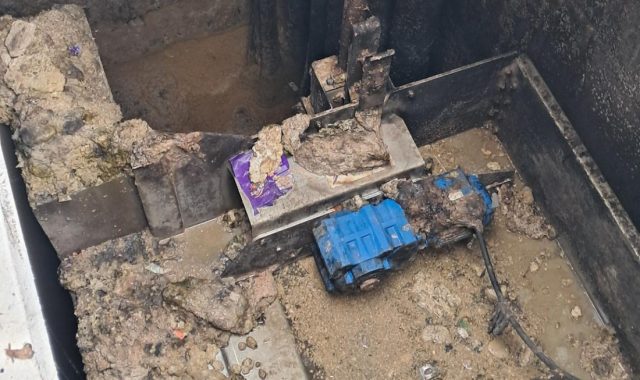
During the visit, it was identified that one storm pump had become seized within the well. Although the pump remains operational, this issue has been escalated to the client for further planned works. Identifying this issue during routine maintenance allows a safe and cost‑effective remediation plan to be developed, avoiding emergency intervention, minimising risk to the network, and reducing long‑term costs.

